It starts innocently enough. You type a prompt, hit enter, and within seconds—there it is. A full article, a design, a piece of music, something that feels almost… authored.
But then comes the slightly uncomfortable thought: who actually owns this?
In India, where digital creativity is booming and AI tools are becoming part of everyday workflows, this question isn’t just theoretical anymore. It’s practical. Urgent, even.
And yet, the answers aren’t as clear-cut as we’d like them to be.
The Law Wasn’t Built for This
India’s primary copyright law—the Copyright Act, 1957—was written long before AI became part of the conversation.
Back then, the idea of a machine generating creative work on its own would’ve sounded like science fiction. So naturally, the law focuses on human authorship. It assumes that a person creates something, and that person holds the rights.
AI complicates that assumption.
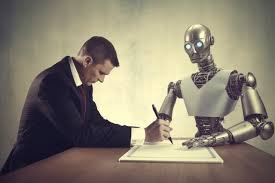
When a machine produces content based on a prompt, who is the “author”? The person who wrote the prompt? The company that built the AI? Or… no one at all?
Human Input Still Matters (A Lot)
Right now, most legal interpretations in India lean toward one key idea—human involvement.
If you’re using AI as a tool, but you’re guiding it, editing the output, shaping the final result, then you likely have a stronger claim to ownership. The more human creativity you inject, the clearer your position becomes.
Think of AI as a collaborator, not a creator.
This is why simply copying raw AI output and publishing it without modification can feel like walking on thin ice. There’s very little “you” in it.
The Grey Area Everyone Is Talking About
And this is where the big question comes in: “AI-generated content ka copyright India me kaise handle ho raha hai?”
The honest answer? It’s still evolving.
There’s no definitive, universally accepted framework yet. Courts in India haven’t fully settled this issue, and policymakers are still catching up with the speed of technological change.
For now, it’s less about strict rules and more about interpretation.
Ownership vs Usage Rights
Another layer that often gets overlooked is the difference between ownership and usage.
Even if you don’t fully “own” AI-generated content in a traditional sense, you might still have the right to use it—depending on the terms of the platform you’re using.
For example, tools developed by companies like OpenAI or Google often come with their own policies about how generated content can be used commercially.
So before you publish, sell, or repurpose AI content, it’s worth checking the fine print. It’s not the most exciting read, but it can save you headaches later.
The Risk of Similarity
Here’s another subtle challenge.
AI models are trained on vast amounts of existing data. While they don’t copy directly, they can sometimes produce outputs that resemble existing works—phrases, structures, even ideas.
In India, copyright law protects original expression. So if your AI-generated content ends up being too similar to someone else’s work, you could face legal issues—even if you didn’t intend to copy anything.
That’s why editing and personalizing AI output isn’t just about quality—it’s about safety too.
Businesses and Content Creators: What Should You Do?
If you’re a blogger, marketer, or business owner in India, the safest approach is pretty straightforward—don’t rely entirely on AI.
Use it as a starting point. A brainstorming partner. A way to speed up your workflow.
But always add your own voice, your own insights, your own structure.
This doesn’t just help with copyright concerns—it also makes your content more authentic. More human. And ironically, more valuable in a world filled with automated outputs.
The Global Influence
It’s also worth noting that India isn’t operating in isolation.
Countries around the world are grappling with the same questions. Some are proposing new laws, others are updating existing ones. These global developments will likely influence how India shapes its own policies in the coming years.
So what feels unclear today might become more defined sooner than we expect.
So, Where Do We Stand?
Right now, AI-generated content in India sits in a legal grey zone.
It’s not completely unregulated, but it’s not fully defined either. The emphasis remains on human contribution, originality, and responsible use.
If you’re expecting a simple rulebook, you might be waiting a while.
Final Thoughts
There’s something fascinating about this moment we’re in.
Technology is moving faster than the laws designed to regulate it. And while that creates uncertainty, it also opens up space for new ideas, new frameworks, new ways of thinking about creativity.
For now, the safest path is also the simplest—be involved in what you create.
Because at the end of the day, ownership isn’t just about legal definitions.
It’s about contribution. Effort. And the human touch that no algorithm can fully replace.