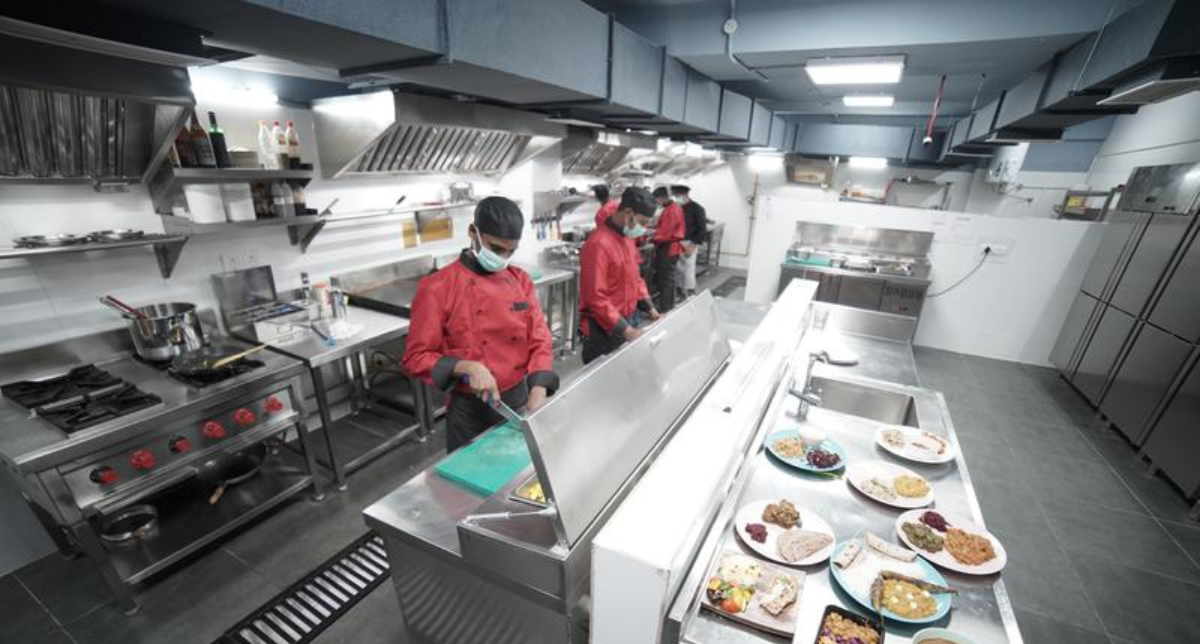
A few years ago, the idea of running a restaurant without a dining space felt almost strange. No tables, no ambience, no walk-in customers—just food, cooked somewhere behind the scenes and delivered to your door.
And then, suddenly, it wasn’t strange anymore. It was everywhere.
Cloud kitchens—sometimes called ghost kitchens—started popping up across Indian cities. For aspiring entrepreneurs, it looked like the perfect entry point into the food business. Lower investment, faster setup, and access to a massive online audience through platforms like Swiggy and Zomato.
But now that the dust has settled a bit, a more grounded question is being asked—has the market become too crowded?
The Early Appeal: Why Everyone Jumped In
It’s not hard to see why cloud kitchens took off so quickly in India.
Traditional restaurants are expensive. Rent alone can break your back, especially in prime areas. Add to that interiors, staff, licenses—it’s a long list.
Cloud kitchens, on the other hand, offered a leaner model. You could operate out of a smaller space, focus purely on food quality, and rely on delivery apps for visibility.
For many, it felt like a shortcut into entrepreneurship.
And during the pandemic, when dine-in options were limited, this model didn’t just survive—it thrived.
The Shift: From Opportunity to Competition
Fast forward to today, and things look a bit different.
The same low entry barrier that made cloud kitchens attractive has also made the market crowded. Really crowded.
Scroll through any food delivery app in a metro city, and you’ll see dozens—sometimes hundreds—of options for the same cuisine. Burgers, biryani, momos, pizza… the categories are saturated.
Which naturally leads to the question: “Cloud kitchens ka future India me oversaturated ho raha hai kya?”
It’s not an easy yes or no. But there’s definitely some truth to the concern.
Discoverability Is Getting Harder
One of the biggest challenges today isn’t cooking good food—it’s getting noticed.
With so many brands competing on the same platforms, visibility often comes down to ads, discounts, and algorithm rankings. And that’s where things get tricky.
If you’re constantly offering discounts to stay competitive, your margins shrink. If you don’t, you risk getting buried under dozens of similar listings.
It becomes less about food, more about strategy.
Quality vs Quantity
Here’s something interesting, though.
While the number of cloud kitchens has increased, not all of them are sustainable. Many shut down within months. Why? Because running a food business—even without a dining area—isn’t easy.
Consistency matters. Packaging matters. Delivery time matters. And customer reviews? They can make or break you overnight.
So while the market feels crowded, it’s also self-correcting. The weaker players drop off, and the stronger ones find a way to stay.
Niche Is the New Survival Strategy
If there’s one pattern that stands out, it’s this—generalization doesn’t work anymore.
The days of “multi-cuisine” cloud kitchens trying to do everything are fading. Instead, niche concepts are gaining traction.
- A brand focused only on regional thalis
- A dessert-only kitchen with a signature item
- Health-focused meals targeting fitness audiences
When you specialize, you stand out. And in a crowded market, standing out is half the battle.
The Role of Branding
Cloud kitchens don’t have physical spaces to create an impression. So branding has to do the heavy lifting.
Your logo, your packaging, your social media presence—it all matters.
Some of the more successful cloud kitchens in India feel less like “just another food outlet” and more like actual brands. They tell a story, create an identity, and build loyalty beyond discounts.
And that’s where many new entrants struggle.
Profitability: The Real Challenge
Let’s talk numbers for a second.
Commission fees from delivery platforms can be significant. Add ingredient costs, staff salaries, packaging, and marketing—it starts adding up.
Without strong volume or repeat customers, profitability becomes a challenge.
This is why some cloud kitchens eventually move towards hybrid models—adding a small dine-in space or creating direct ordering channels to reduce dependency on aggregators.
Is There Still Opportunity?
Despite the challenges, it’s not all doom and gloom.
India’s food delivery market is still growing. Smaller cities are catching up. Consumer habits are shifting—ordering in is no longer occasional; it’s routine for many.
But the opportunity today isn’t as simple as “start a cloud kitchen and succeed.”
It requires sharper thinking.
Better branding. Stronger differentiation. Smarter operations.
Final Thoughts
Cloud kitchens in India are at an interesting stage.
They’re no longer a novelty, but they’re not a closed chapter either. The easy wins are gone, yes—but the smarter opportunities are still there.
If you’re entering this space today, you can’t rely on the model alone. You need a clear idea, a strong identity, and a willingness to adapt.
Because the market isn’t just crowded—it’s evolving.
And in evolving markets, survival isn’t about being the first. It’s about being the one who learns fastest.