Creating a durable and safe volleyball court within a limited budget is a common challenge for schools, academies, and sports clubs. The right surface not only enhances gameplay but also ensures player safety and reduces long-term maintenance expenses. With modern innovations in volleyball court flooring, it is now possible to build high-quality courts without overspending.
This guide explores cost-effective flooring options, construction insights, and practical tips,now including standard volleyball court dimensions for proper planning.
Why Choosing the Right Volleyball Court Surface Matters
A well-designed court goes beyond aesthetics. The right volleyball court surface directly impacts:
- Player safety and injury prevention
- Ball bounce and game consistency
- Durability under frequent usage
- Maintenance costs over time
For institutions with daily usage, selecting the right flooring becomes even more critical.
Standard Volleyball Court Dimensions (Must Know)
Before selecting materials, understanding official volleyball court dimensions is essential for proper layout and gameplay.
Standard Court Size
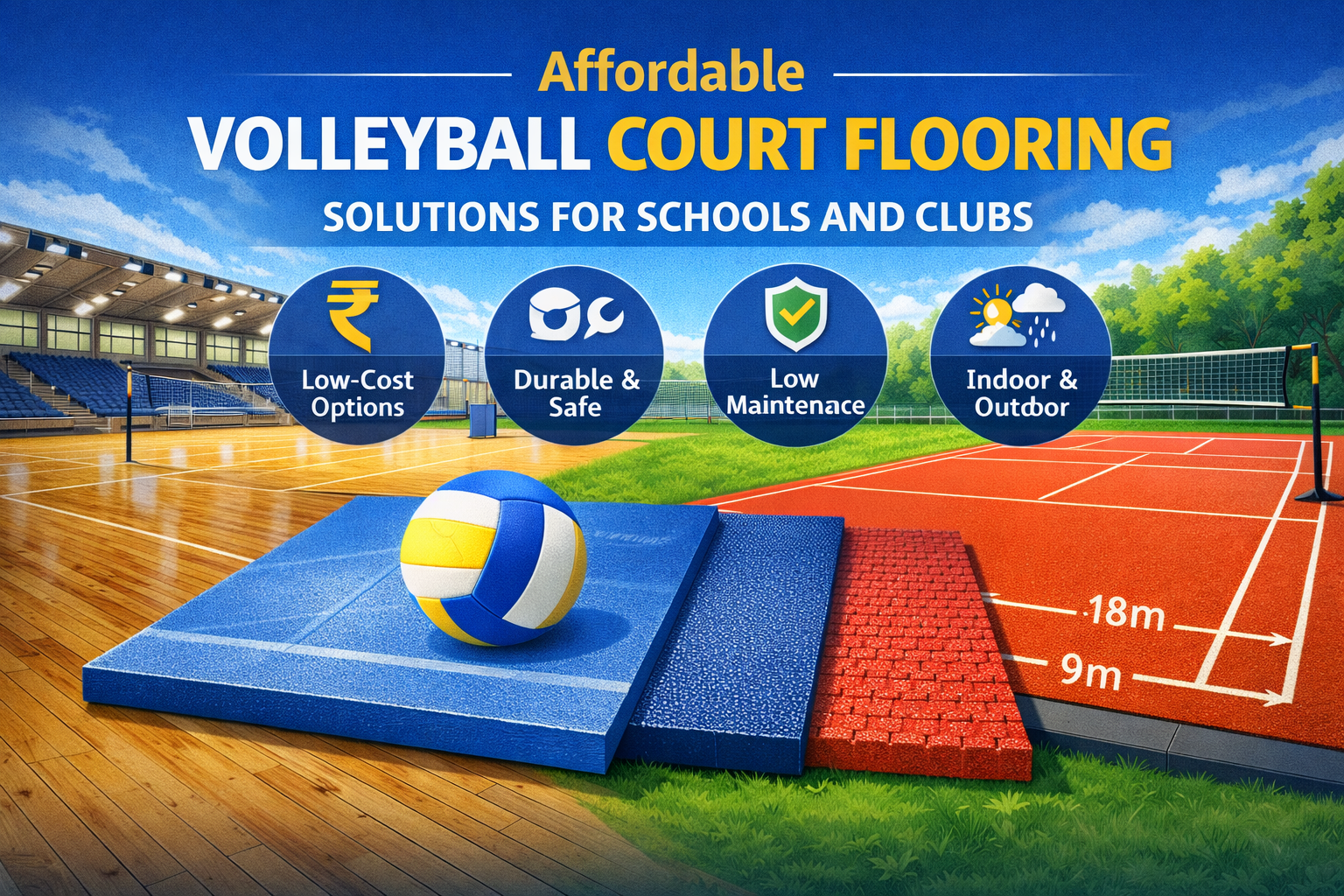
- Length: 18 meters
- Width: 9 meters
Key Markings
- Attack Line: 3 meters from the center line on each side
- Center Line: Divides the court into two equal halves
- Service Zone: Minimum 3 meters behind the end line
Net Height
- Men: 2.43 meters
- Women: 2.24 meters
Free Zone (Recommended Space Around Court)
- At least 3 to 5 meters on all sides for safe movement
Proper dimensions ensure the court meets professional standards and enhances player experience, especially in schools and clubs aiming for competitive-level play.
Common Volleyball Court Flooring Options
There are several sports flooring materials available for volleyball courts, each with different cost and performance levels.
1. Concrete Base with Acrylic Coating (Most Affordable Choice)
This is one of the most popular and budget-friendly solutions, especially for outdoor courts.
Benefits:
- Low initial investment
- High durability in outdoor conditions
- Slip-resistant textured surface
- Minimal maintenance required
Acrylic systems are widely used in schools due to their balance between cost and performance.
2. Synthetic Flooring Systems
Modern synthetic volleyball court flooring offers improved comfort and performance. These surfaces are typically layered over a concrete or asphalt base.
Benefits:
- Better shock absorption than plain concrete
- Long-lasting and weather-resistant
- Suitable for both indoor and outdoor courts
This option is slightly higher in cost but offers better long-term value.
3. Interlocking Tiles (Modular Flooring)
Interlocking tiles are commonly used for temporary or multi-purpose courts.
Benefits:
- Easy to install and replace
- No major groundwork required
- Suitable for indoor facilities
Limitations:
- Less durable for heavy outdoor use
- May not provide professional-level performance
4. Wooden Flooring (Premium Indoor Option)
Wooden courts are ideal for professional indoor volleyball setups but are usually not budget-friendly for schools.
Benefits:
- Excellent shock absorption
- Professional playing experience
Drawbacks:
- High installation and maintenance cost
- Not suitable for outdoor environments
Indoor vs Outdoor Volleyball Court Flooring
Indoor Courts
Indoor courts generally use wooden or synthetic surfaces for better cushioning and performance.
Outdoor Courts
For outdoor setups, outdoor volleyball court flooring must withstand heat, rain, and heavy usage. Acrylic-coated concrete and synthetic systems are the most practical choices.
Key Factors to Consider for Budget-Friendly Flooring
1. Usage Frequency
Schools and clubs experience high footfall, so the flooring must be durable and resistant to wear.
2. Initial vs Long-Term Cost
While some materials may seem cheaper initially, they may require frequent repairs. Choosing durable volleyball flooring materials can reduce long-term expenses.
3. Maintenance Requirements
Low-maintenance surfaces like acrylic coatings are ideal for institutions with limited resources.
4. Safety Features
A good court must offer:
- Anti-slip texture
- Proper grip for quick movements
- Shock absorption to reduce injuries
Volleyball Court Construction on a Budget
Efficient volleyball court construction plays a crucial role in cost savings. A typical process includes:
- Preparing a strong concrete or asphalt base
- Ensuring proper leveling and drainage
- Applying primer and surface coatings
- Adding acrylic or synthetic layers
- Marking court lines as per official dimensions
Proper construction ensures durability and reduces future repair costs.
Cost Overview for Schools and Clubs (India 2026)
The volleyball court cost depends on size, materials, and location. Here’s an approximate breakdown:
- Basic concrete + acrylic coating: ₹2–5 lakh
- Synthetic flooring system: ₹4–8 lakh
- Modular tile flooring: ₹3–7 lakh
- Wooden indoor court: ₹10 lakh+
Among these, acrylic systems provide the best balance between affordability and performance.
Why Acrylic Flooring is the Best Budget Solution
For schools and clubs, acrylic-based systems stand out as the most practical option.
Key advantages:
- Cost-effective installation
- Long lifespan with minimal maintenance
- Weather resistance for outdoor use
- Consistent playing surface
- Suitable for multi-sport courts
This makes acrylic flooring a smart investment for institutions looking to maximize value.
Tips to Reduce Volleyball Court Costs
- Use a multi-purpose court design for multiple sports
- Choose durable materials to avoid frequent repairs
- Work with experienced contractors for proper installation
- Plan drainage systems to prevent water damage
- Opt for low-maintenance surface coatings
Final Thoughts
Affordable volleyball court flooring is achievable with the right planning and material selection. Schools and clubs do not need to compromise on quality to stay within budget. By combining proper volleyball court dimensions with reliable volleyball court flooring solutions such as acrylic or synthetic systems, institutions can build safe, durable, and high-performing courts.
Investing in the right surface today ensures better gameplay, reduced maintenance, and long-term savings,making it a win-win for both players and facility managers.