Water doesn’t usually make it onto a business owner’s list of daily worries. There are customers to serve, employees to manage, equipment to maintain, and a hundred little problems that seem more urgent. Yet water quietly touches almost every part of many commercial operations.
It runs through coffee machines, ice makers, boilers, dishwashers, production equipment, and plumbing systems. When its quality isn’t right, the effects can slowly show up as scale, poor performance, unusual tastes, or repeated equipment issues.
The frustrating part is that these problems often don’t happen overnight. They build gradually. By the time someone notices, the cost can already be significant.
That is why understanding water treatment is less about chasing “perfect” water and more about creating water that’s appropriate for the job.
Start With the Water You Actually Have
Every water supply has its own characteristics. Municipal water may contain disinfectants and dissolved minerals, while private wells can have naturally occurring iron, sulfur, hardness, or sediment.
Before selecting treatment equipment, a water test is one of the most useful steps you can take.
Testing provides a clearer picture of hardness, pH, dissolved solids, sediment, chlorine, iron, sulfur, and other characteristics. Once those details are known, it becomes much easier to decide what treatment is actually necessary.
Otherwise, businesses can end up paying for equipment that solves a problem they don’t even have.
Why Water Quality Matters to Commercial Equipment
Commercial equipment is often designed around certain water-quality conditions.
Coffee machines may have recommendations for hardness and mineral content. Boilers can be sensitive to scale. Ice makers may require regular attention when mineral deposits accumulate. Manufacturing equipment can have even more specific requirements.
When the water doesn’t meet those needs, performance can suffer.
The solution isn’t always filtration. Sometimes softening is appropriate. In other cases, reverse osmosis or another specialized treatment method may make more sense.
The key is matching the treatment to the equipment.
Understanding Deionization Systems
For applications requiring very low levels of dissolved ions, deionization systems can play an important role.
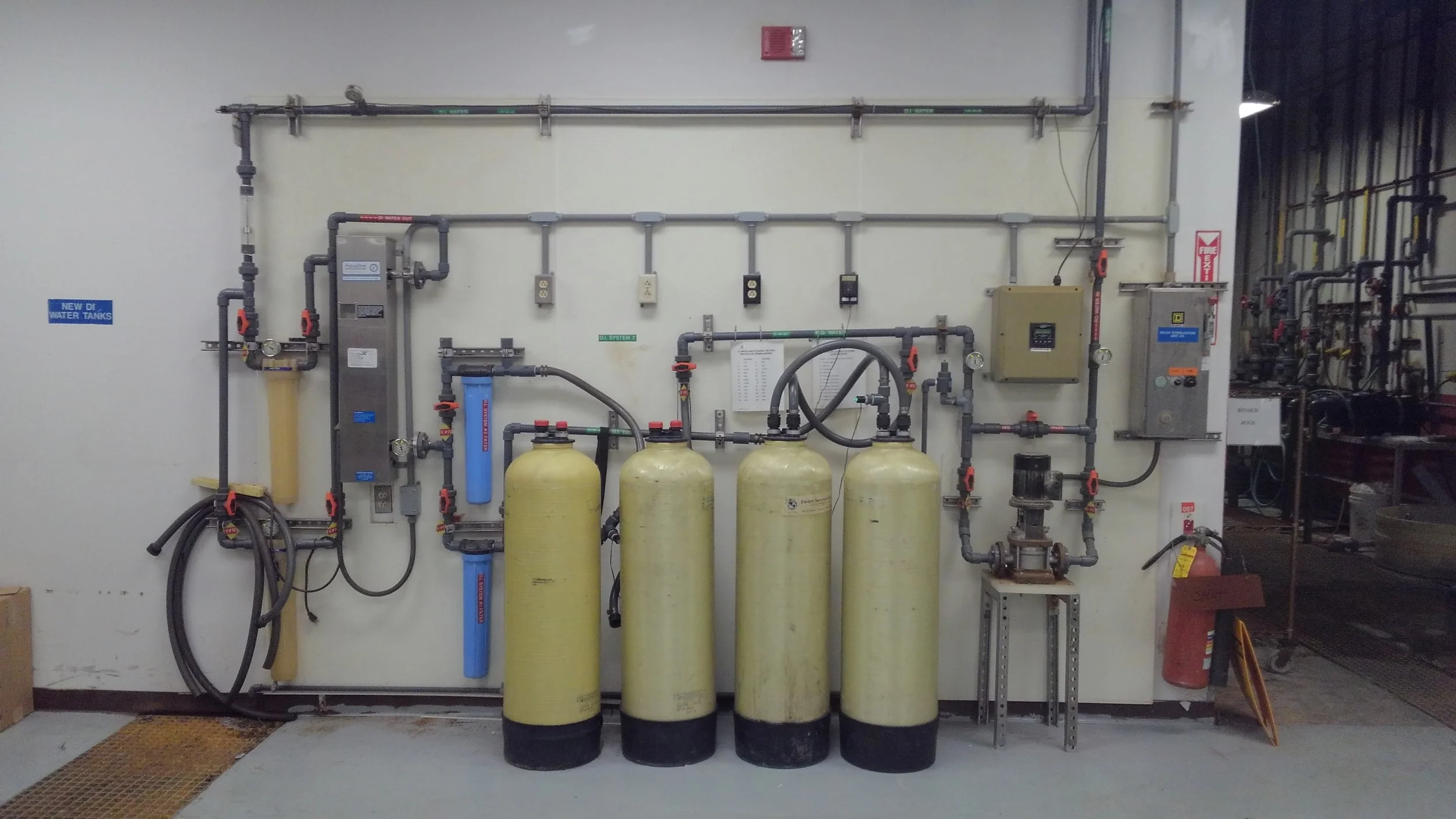
Deionization uses ion-exchange technology to reduce charged dissolved substances in water. It is often used in specialized commercial and industrial environments where ordinary filtration doesn’t provide the required water quality.
However, deionization isn’t necessarily the first treatment step.
Depending on the incoming water, pretreatment may be needed to reduce hardness, sediment, chlorine, or other substances that could affect downstream equipment.
In some applications, reverse osmosis is used before deionization to reduce the dissolved load entering the ion-exchange stage.
It’s a good example of why water treatment works best when viewed as a complete system rather than a collection of individual filters.
Filtration Can Handle Many Everyday Concerns
Not every business needs ultra-pure water.
For many applications, straightforward water filtration systems can address practical concerns such as sediment, chlorine-related taste and odor, and other targeted issues, depending on the filtration media being used.
Activated carbon, sediment filters, specialty media, softeners, and membranes all have different purposes.
More filtration stages don’t automatically mean better treatment. What matters is whether each stage is doing something useful.
A properly designed three-stage system can be more effective and economical than a complicated system with several unnecessary components.
Hard Water Is a Quiet Trouble Maker
Hard water is one of the most common reasons businesses consider treatment.
Calcium and magnesium are responsible for most water hardness. As water is heated or evaporates, these minerals can contribute to scale deposits.
At first, the signs may seem harmless. A little white residue on fixtures. Spots on glasses. Maybe a heating element that needs cleaning more often.
Inside commercial equipment, though, scale can become much more troublesome.
It can interfere with heat transfer, restrict water passages, and increase maintenance requirements.
Softening Can Help When Hardness Is the Issue
Commercial water softeners can reduce calcium and magnesium through ion exchange.
But sizing matters.
A system needs to be able to handle the building’s actual water demand, including periods when usage suddenly increases. A restaurant during a busy dinner service can have very different requirements from a small office.
Water hardness, flow rate, daily consumption, peak demand, and regeneration requirements should all be considered.
Choosing equipment based only on the building’s size is rarely enough.
Preventing Problems Is Usually Better Than Repairing Them
Nobody likes an unexpected equipment failure, but businesses often feel the consequences more sharply than households.
If a coffee machine stops working during the morning rush, employees lose time and customers may leave unhappy. If a boiler or production system goes down, the financial impact can be much larger.
Proper water treatment and maintenance may help reduce certain water-related equipment problems.
The goal is not to promise that treatment will prevent every breakdown. Machines still wear out, electrical components fail, and mechanical parts eventually need replacement.
But if water quality is contributing to avoidable problems, addressing it is simply sensible.
How Treatment Can Reduce Maintenance Pressure
Maintenance teams have enough on their plates already.
When equipment develops scale or mineral deposits, cleaning may take longer. Components may need more frequent inspection. Filters and parts may need replacement sooner.
A properly designed treatment strategy can help manage some of these water-related issues.
In practical terms, businesses may be working toward no more costly and time-consuming breakdowns, especially when recurring water-quality problems are contributing to equipment trouble.
That doesn’t mean zero maintenance. Quite the opposite. Regular maintenance remains essential.
The difference is that you’re managing the problem proactively instead of constantly reacting to it.
Reverse Osmosis Has a Different Role
Reverse osmosis is particularly useful when a business needs to reduce many dissolved substances from its water.
An RO membrane allows water to pass through while rejecting a significant portion of dissolved materials. The exact performance depends on membrane type, pressure, incoming water quality, temperature, and other operating conditions.
RO can be useful in food and beverage production, drinking-water applications, specialized manufacturing, and other situations where lower dissolved-solids levels are desirable.
But RO systems also produce a wastewater stream and require appropriate maintenance.
Again, it’s not about choosing the most advanced technology. It’s about choosing the technology that makes sense.
Pretreatment Protects the Treatment System
One treatment stage can sometimes make life easier for another.
Sediment filtration can remove particles before water reaches sensitive components. Carbon treatment may address certain substances that can affect downstream equipment. Softening can reduce hardness before water enters an RO system.
This kind of pretreatment can improve the overall reliability of a treatment system.
It’s similar to preparing a surface before painting. The final result depends partly on what happened beforehand.
Capacity Matters More Than People Think
A treatment system can be excellent and still be the wrong choice if it can’t keep up with demand.
Commercial facilities should consider average consumption and peak usage.
A restaurant may experience high demand around meals. A hotel can have multiple simultaneous water demands. A factory might need treated water continuously during production.
Storage tanks can sometimes help manage peaks, but the entire system needs to be designed around real operating conditions.
Future growth matters, too. A system that barely meets today’s needs may become inadequate after a business expands.
Don’t Forget Storage and Distribution
Water quality can change after treatment if the storage or distribution system isn’t appropriate.
Tanks, pipes, pumps, valves, and dispensing equipment all become part of the water-treatment pathway.
For sensitive applications, these components should be selected and maintained with the final water quality in mind.
There’s little value in producing excellent treated water if the distribution system introduces problems afterward.
Maintenance Keeps Treatment Reliable
Every treatment system has consumable components.
Filters eventually need replacement. RO membranes need monitoring and periodic service. Deionization media becomes exhausted. Softening equipment requires regeneration and maintenance.
Businesses should know these requirements before installation.
A maintenance plan helps prevent neglected equipment from slowly losing performance. Water quality should also be monitored when the application calls for it.
It’s much easier to spot a gradual change than to discover a serious problem after equipment starts behaving strangely.
Think About Total Cost, Not Just Purchase Price
The cheapest system isn’t always the most economical.
Look at installation, replacement filters, treatment media, electricity, water consumption, maintenance, service calls, and potential downtime.
A slightly more expensive system may provide better long-term value if it’s correctly sized and easier to maintain.
On the other hand, unnecessary technology can create its own costs.
Good water treatment is about balance.
The Bottom Line
Commercial water treatment isn’t really about buying the biggest or most sophisticated system available. It’s about understanding the water, the equipment, and the business’s actual requirements.
Testing should come first. From there, the right combination of filtration, softening, reverse osmosis, deionization, or other technologies can be selected.
When the system is properly designed and maintained, it can support equipment performance, reduce certain water-related maintenance problems, and make day-to-day operations more predictable.
And in a busy commercial environment, predictable is a very good thing. Sometimes the best water-treatment system is the one you barely notice because everything simply keeps working.